Showing posts with label Treatments. Show all posts

TREATMENT FOR BREAST CANCER IN WOMAN

After many years of using one-size-fits-all therapies to fight breast cancer, doctors are using new tools to aid in deciding when their patients can omit chemotherapy or other harsh treatment for breast cancer in women.

The approach to oncology treatment that has made up in place for decencies is starting to yield to an arsenal of long-run clinical studies, genetic tests and novel drugs that aim cancer cells and their substructure.

Traditional chemo side effects and breast cancer drugs work by interfering with the entire body's system of cell reproduction, causing harsh side effects like fatigue and hair loss.

Treatment For Breast Cancer In Women

Since the completion of the human genome studies in 2003, scientists have made advancement in unlocking the genetically foundation of a range of diseases, including breast cancer. That has paved the way for genetic examination, likewise as drugs that halt specific pathways that cancer cells use to develop and multiply.

Such treatment for breast cancer in women targeted cancer drugs, which sometimes prevent the need for chemotherapy, are being sold by companies ranging from Pfizer Inc , the world's largest drug maker, to Ariad Pharmaceuticals Inc , which early on this year set up its first drug, to treat leukemia.

At the same time, mass studies that consider whether some types of patients are better off with less therapy are giving doctors more confidence to hold back on using traditional cancer drugs for treatment for breast cancer in women.

Laurie Levin, a woman of 64, was successfully treated in her 20s for non-Hodgkin's lymphoma, but faced a treatment dilemma after being diagnosed with breast cancer in 2005, since the earlier radiation and chemotherapy had already elevated her risk of building up heart problems or leukemia. A $4,000 genetically test indicated that her breast cancer was unlikely to come back, providing the trust to undergo a lumpectomy and avoid chemotherapy.

The use of Oncotype DX test, which examines genes involved in tumor recurrence, has cut the use of chemotherapy treatment for breast cancer in women patients by 20 percent over the past eight years in U.S. Based on its maker, Genomic Health Inc . The company recently launched a similar test configured to assess whether men with prostate cancer need to undergo surgery or radiation. Tests and studies can elucidate treatment, but costs remain on the upswing because the latest drugs are really expensive, with monthly price tags frequently in the thousands of dollars. By 2016 annual global sales of cancer drugs will nearly triple, to $88 billion from a decade earlier, according to IMS Health.

The "less is more" approach to cancer will be one highlight of ASCO's annual meeting in Chicago that commences at the end of this month. On Wednesday, ASCO released thousands of abstractions on new clinical test of cancer treatments.

One big, long-term study discovered that most men diagnosed with early-stage seminoma, a common type of testicular cancer, did fine with no treatment following surgery to remove the tumors. Cure rates for the disease have always been rather high. Several European countries, including Denmark where the study was carried out, monitor seminoma patients for any relapse before further treatment. In the United States, about half of early-stage patients are still given radiation or chemotherapy, according to ASCO.

Physicians state it is complicated to quantify in statistics, but there is arising recognition that less is more in terms of potentially toxic cancer treatments. The alternative treatment for breast cancer approach is especially important for young patients who will have many years ahead of them after beating an initial bout of cancer.

A study introduced earlier this year at an ASCO meeting in Florida establish similar survival rates for men with high-risk prostate cancer who received radiation and either 18 or 36 months of hormone therapy. The findings advise the therapy, which causes substantial side effects, could be given for less than the current standard of 24 to 36 months.

Another recent study out of the Duke Cancer Institute in Durham, North Carolina, found that survival odds for women with early-stage breast cancer who underwent breast-preserving surgery such as lumpectomy were as good as, or even better than, the odds for women who had mastectomies.

The first-ever study demonstrating that a type of leukemia could be cured without using chemotherapy was released in December. The Italian-German study found that a combination of a derivative of vitamin A, known as ATRA, and arsenic trioxide, a newer drug, worked as well as ATRA and chemotherapy in patients newly diagnosed with acute promyelocytic leukemia (APL).

A recent trial carried out in France discovered that omitting standard chemotherapy, which has been linked to heart damage, from the initial treatment of a type of childhood leukemia did not reduce survival outcomes. The priciest therapies are configured to take advantage of genetic mutations associated with cancer cells, some of them happened only in a small percentage of patients.

A new drug for melanoma, BRAF inhibitor Zelboraf from Roche Holding AG , is designed to work by targeting a specific genetic mutation found in about half of all melanomas. Patients are first tested to see if they have it. Pfizer's lung-cancer drug Xalkori, which targets a mutation in the ALK gene, works in about 4 percent of lung cancer patients. It also has been effective as a treatment for a rare but aggressive type of childhood lymphoma.

Diagnostic Mammogram Results Breast Examination Recommendations

Recent breast examination research recommendations show that diagnostic mammogram results do not really help women over the age 50 as much as what has been believed. The benefits of mammography are limited

A study conducted in Norway concludes mammogram results reduce the risk of an early death, but the benefit is disappointingly low. Breast cancer death rates in women undergoing mammography breast examination screening fell 28% in areas where routine screening was introduced in Norway, but only around 30% of the reduction could be attributed to the screening.

The death rate benefit ascribed to diagnostic mammogram screening was a decrease of 2.4 breast cancer deaths per 100,000 person-years, out of the total decrease of 7.2 deaths per 100,000 person-years from historical levels. The apparent effect of screening mammography was considerably smaller than expected. It's not the great lifesaver that people think it is.

Researchers followed the women over 50 breast cancer death rates who got regular mammograms and compared those to the death rate in an older group of women who didn't get the breast examination screening. They ascertained mammograms actually made little difference. Some 2,500 women would have to be regularly screened over 10 years to save one life from breast cancer.

Experts say most of that benefit wasn't from the screening, but rather due to better treatment and greater awareness of the disease.

However, other doctors advised women not to be discouraged about these findings. Doctors advice would be to actually to continue with current breast examination recommendations as some doctors do have personal experience with people having early detection and saving their lives.

Some suggest that the little benefit of diagnostic mammograms in the latest study results may be because the women weren't followed long enough. Maximum follow-up time was less than nine years, which could be insufficient to fully valuate the effects of mammograms screening. The American Cancer Society has long advocated that women get annual breast cancer screenings starting at 40.

Breast Cancer Survival Rate Improved Using Targeted Therapy and Genetic Profiling

Breast cancer is one of the most common cancer in women in many countries and the peak age of occurrence is between 44 and 60 years old. New research found that breast cancer survival rate are being improved using targeted therapy and genetic profiling of tumors. An advancement in breast cancer treatment.

Such advancements consists of developments in radiotherapy, which have enabled this treatment selection to get more targeted and develop less side effects and the existence of new chemotherapy and hormonal drugs.

Radiotherapy is now more exact and these cuts down long term adverse effect on the surrounding organs. Betterment in chemotherapy permits formerly resistive tumors to be controlled. Having more chemotherapy options allows oncologist to use less older and more toxic chemotherapy drugs.

Study has indicated that advancements in medical technology have corresponded with improvement in breast cancer survival rates. The latest betterment in breast cancer treatment are targeted therapy and tumor genetic profiling.

Targeted therapy is a new type of cancer treatment which utilizes drugs or other compounds to home in on and attack cancer cells. Genetic profiling of tumor correspondences and deciphers the genetic data of tumors. Genetic profiling permits doctor to anticipate the behavior of the cancer, especially its ability to induce a relapse in future.

One example of how targeted therapy can be used to fight breast cancer is the artificially produced antibody trastuzumab, which could be used in both early and late stage breast cancer if the target that the antibody works on is present.
These drugs switch off the growth breast cancer cells, which forces cancer to grow and proliferate. Their added advantage is that they have minimal side effects.

Besides advancements in breast treatment, a change in doctors approach to breast cancer treatment which may have also encouraged breast cancer survival rates. There is a trend in doctors towards being more restrained or conservative use of surgery and being more aggressive use of chemotherapy, targeted therapy and hormonal therapy.

By channelizing effort towards better control of relapse in the rest of the body, the survival rates of with breast cancer has steadily improved. Now, when breast cancer is discovered at an earlier stage, it is not rare to be able to reach long-term survival in eight or nine out of 10 women.

Breast Cancer Radiation Treatments – Single Dose Treatment for Breast Cancer

A new Breast Cancer Radiation Treatments results were published in The Lancet medical journal indicating that single dose of radiation treatment for breast cancer during surgery is just as efficient for breast cancer patients compared to those receiving weeks of radiation.

Over 2,000 women from 9 countries in Europe, North America and Asia participated in the test, in which a one-time blast radiation or was directed at a tumor location during surgery. The test presented that four years after this single dose radiation treatment for breast cancer, the chances of having a recurrence of breast cancer was almost the same for both radiation treatments.

Applying the single dose procedure would be more convenient for patients and also greatly cut down the waiting lists. It is the next step in opening up a wider range of alternatives for women. These new treatment technique could save patients weeks of after operation radiotherapy that can lead to 20 or 30 visits to hospital. The single dose breast cancer radiation treatment during surgery also prevents possible harm from radiation exposure to organs such as the heart, lung, and oesophagus.

These new technique is called the Targets Intra-operative Radiotherapy, whereby a mobile radiotherapy machine is used to insert into the breast to direct the exact locate of the breast cancer. However, the major drawback is that while the study followed women for four years after their cancer was diagnosed, the disease can sometimes recur after eight or more years. Also, the findings were only applicable to women with a same type of breast cancer as those in the test but still researchers were excited about the findings.

Radiotherapy is already a very effective treatment, so improving it even further is an exciting prospect. Additional follow-up on these women will be required to affirm whether this breast cancer radiation treatment is not only makes the most of the therapy’s power but also reduces any long-term side effects.

Hyperthermia Surgery - Inflammatory Breast Cancer Survival

This patient was diagnosed with Inflammatory Breast Cancer but she avoided the conventional treatments and went for Hyperthermia Surgery.


Hyperthermia is an alternative breast cancer treatment. The combination of Hyperthermia with low IMRT radiation therapy, is consider one of the best alternatives breast cancer treatment available in present days, this is due to the low or non side effects an high response rates. Extensive treatments and research from Duke University in the last two years shows proof that it is by Dr. James Bicher who had worked on this efficient modality of cancer treatment since 1983, which is over 36 years.

Breast Cancer Pain

Breast cancer pain can last for many years. A survey shows that nearly half of the breast cancer survivors suffer from persistent pain after surgery that could last even two to three years. Nearly 60% of the 3,253 women being surveyed experience other symptoms of nerve damage, such as numbness or tenderness, according to a study of all Danish women treated for breast cancer in 2005 and 2006.

Breast cancer patient can experience pain that come from cancer pain and non-cancer pain.

Breast cancer pain may due to the following:
1. Breast tumor: occasionally the mass in the breast may hurt. Moderate to severe pain can be felt within the breast if it is an inflammatory breast cancer. These is due to cancer in the skin above the breast tumor. Pain can also be felt if the tumor has made an ulcer or sore through the skin covering the breast.

2. Metastases: The cancer that have spread into other parts of the body is called metastatic disease. These may produce pain in the involved areas. For instance, when the cancer spreads to the bone, it can cause pain in the back, hips, or other bones. Cancer that has spread to the brain may cause headaches. Severe back pain with leg weakness may be from cancer that has metastasized to the spinal cord. Patient may felt a dull back pain if the cancer spreads to the adrenal glands. If it spreads to the liver, the upper right part of the abdomen can be painful.

3. Treatment: Sometimes the treatment can makes the cancer hurt more. For instance, the commencement of hormone therapy or radiation for bone metastases may cause a burning of bone pain. This occurs because the cancer swells in reaction to treatment and places more pressure on the bone's nerve supply.

4. Breast pain: Although breast pain is typically non-cancerous, new and persistent uncomfortableness in only one breast may be of concern. This is particularly real if the pain is relapsing without any clear explanation. A breast exam, radiology studies, and possibly a biopsy may be recommended.

Pain can also come from these non-cancer sources like, surgery, radiation, chemotherapy, recovery phase, non-cancerous breast changes.

A study show that non-Caucasian patients were 2.52-times more likely than their Caucasian counterparts to experience severe pain. Other predictors for greater pain were inactive performance status and having had radiation treatment beside the race. As noticed, non-Caucasian race was also a risk factor for worsening pain during follow-up.

A research show that Acupuncture may ease breast cancer pain. Women were expected to rate the severity of their pain and its effect on daily functions, on a scale of 0 to 10. At the beginning of the study, the average pain rating was 6.7. After six weeks, the rated pain scale is on average 3.0. In addition to seeing a significant reduction in the severity of their pain, the group also discovered betterment in their overall physical well-being.

Some alternative therapies can also help improve quality of life and control pain for women with breast cancer. For example:
1. Ioining a hypnosis and psychotherapy group. Pain was scaled down significantly for women with metastatic breast cancer who combined hypnosis and therapy .

2. Learn Zen meditation. Individuals who meditate felt reduced perception of pain that can cut down the need for pain medication.

3. Join a laughter yoga group. It is utilized as a complementary way to promote wellness and cope with illness.

Breast Cancer Radiation Short Term Successful

An intense short term breast cancer radiation therapy just as effective. A three-week course found to be just as effective as the standard five-week regime for early-stage breast cancer women.

A professor of oncology of the Michael G. DeGroote School of Medicine at McMaster University, Dr. Tim Whelan, headed a team of researchers to discover that women who accepted the accelerated therapy have a lower risk of the breast cancer for as long as 12 years after treatment.

Breast Cancer Radiation Short Term Successful

The study concluded that a more intense but shorter course of therapy is as safe and efficient as the standard treatment for chosen women who have undergone breast-conserving surgery.

Women who undergo a three-week treatment - called the accelerated hypofractionated whole-breast irradiation were found to have a low risk of side effects and recurrence of the cancer more than a decade after the treatment. This conclude that short term breast cancer radiation therapy is just as effective as the standard five-week course of radiation following surgery to remove the malignancy.

These study's results will change cancer treatment practice not just in Canada, but throughout North America and around the world, said Dr. Whelan .

Dr. Whelan, who is also a radiation oncologist at the Juravinski Cancer Centre at Hamilton Health Sciences, said "This is win-win: shorter intense treatment is better for the patient and less costly to provide."

A lot of women with early-stage breast cancer are able to undergo breast-conserving therapy to keep their breast after treatment. Generally, this implies that they first will have a lumpectomy to get rid of the cancer followed by a feed of radiation therapy to kill any unexpanded cancer cells.

Researchers randomly designated 1,234 women from Ontario and Quebec to be addressed with either accelerated radiation or standard radiation between April 1993 and September 1996, The participants were observed for 12 years to ascertain if the accelerated whole-breast radiation was as effective as the standard treatment.

After a decade of treatment, the breast cancer recurrence is 6.2 percent in patients treated with the accelerated radiation therapy, compared to 6.7 percent for patients treated with standard therapy. Both groups of patients also had a good or excellent cosmetic result from the radiation treatments.

Further research is now looking at even shorter more intensive therapy, said Whelan .

"We're now in the middle of further study on more intense radiation over an even shorter time, and we're seeing positive results."

Breast Cancer Radiation

Breast cancer radiation therapy is a treatment that applies high energy x-rays to destruct cancer cells. Breast cancer radiation is a local treatment aimed at the breast and sometimes the surrounding lymph node area to destroy any isolated cells that may have been left behind to cut down the chance of a breast cancer recurrence. Radiation treatments are nomally given after a lumpectomy, or a mastectomy, but only if there is a high risk of a local recurrence.

Breast Cancer Radiation

Radiation breaks the DNA in cancer cells, so they cannot divide and multiply. The non-cancerous cells will survive radiation treatments. Patients who need systemic therapy, such as chemotherapy, may receive their radiation after chemotherapy is accomplished.

Breast Cancer Radiation


External Beam Radiation
The most common and standard type of breast cancer radiation treatment is the External Beam Radiation. Collimated beams of radiation is aimed from external of the body by a machine at the treatment area. Treatments will not begin only after the patient have healed from the breast surgery, or completed chemotherapy.

Accelerated Breast Irradiation
Accelerated Breast Irradiation treatments is used over a relatively short period of time for some patients. It is called Accelerated Partial Breast Irradiation (APBI). This method of breast radiation appears to work similarly as the standard program.

Internal Breast Radiation - Brachytherapy
Internal breast radiation is performed after a lumpectomy, and only uses small seeds or pellets of radioactive material to render a dose of radiation from within the breast tissue. The dose of radiation is given directly to the tumor bed, and greatly reduces potential damage to healthy breast tissue nearby. The size and location of the tumor will determine whether or not a patient is suitable for brachytherapy.

Radiation During Breast Surgery
There is an experimental method of intraoperative radiation therapy (IORT) used during the breast surgery. IORT uses one large dose of radiation, applied directly into the tumor bed, after the tumor has been removed with a lumpectomy when the incision is still open. After the radiation, the incision is then closed, and no any further radiation therapy is needed. The surgical margins must be clear in order to be a suitable for this type of treatment.

The choice of breast cancer radiation treatments will be determined by several details of your diagnosis:

* Cancer stage
* Lymph node status
* Tumor size
* Type of surgery
* Surgical margins
* Location of tumor
* Location, and of extent of metastasis

Breast Cancer Lymph Nodes


Breast Cancer Lymph Nodes
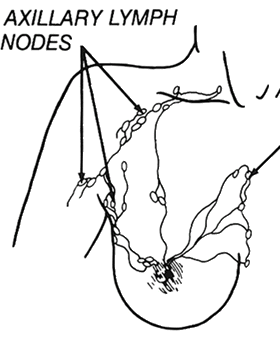
Lymph nodes is an important factor when staging breast cancer. Lymph nodes when containing the breast cancer cells factor the treatment determination, and predicting survival. Breast cancer cells are most commonly spreads first to the axillary (underarm) lymph nodes before spreading to other regions of the body.

Breast Cancer Lymph Nodes

Basically, there are three types of lymph node involvement in breast cancer:

1. Minimal (or microscopic) lymph node involvement:
The lymph nodes are found with only a small number of cancer cells.

2. Significant (or macroscopic) lymph node involvement:
The cancer has spread to a particular lymph node or group of nodes and most of the time it can be felt by hand or seen without a microscope.

3. Extra-capsular lymph node extension:
The whole lymph node is taken over by a breast cancer tumor and spills beyond the wall of the lymph node into the surrounding fat.

Generally, the more extensive the lymph node involvement, the more aggressive the breast cancer will be. But the extent of disease within a particular lymph node is less important than the total number of lymph nodes affected. The more lymph nodes that are involved, the more threatening the breast cancer may be.

The following categories are used to describe the overall level of breast cancer lymph nodes involvement:

* no lymph nodes involved
* 1–3 nodes involved
* 4–9 nodes involved
* 10 or more nodes involved

Negative and Positive Breast Cancer Lymph Nodes:
If lymph nodes are clear of cancer, they are considered negative or clear, and rated N0. Lymph nodes are considered positive or cancerous and rated N1, N2, or N3 depending on the number affected and the location when it contain cancer cells or micro-metastasis. Rating positive breast cancer lymph nodes:

* N1: Cancer is found in 1-3 lymph nodes under the arm or lymph nodes within the breast
* N2: Cancer is found in 4-9 lymph nodes under the arm or lymph nodes within the breast
* N3: Cancer is found in 10 or more lymph nodes under the arm, or has spread under or over the collarbone. It may have been found in the underarm nodes as well as lymph nodes within the breast.

Determining whether the lymph nodes are free of cancer or not is an essential part of the breast cancer staging process and will help determine treatment and prognosis. Tumor size and the extent to which breast cancer has metastasized (spread) to other regions of the body is also examined.

StageTumor SizeLymph Node InvolvementMetastasis (Spread)
ILess than 2 cmNoNo
IIBetween 2-5 cmNo or in same side of breastNo
III More than 5 cm Yes, on same side of breastNo
IV Not applicableNot applicable Yes

An axillary node dissection is a standard way to examine the lymph nodes. This procedure is normally done during the lumpectomy or mastectomy operation. It involves removing 10 to 30 lymph nodes for pathological examination using a microscope. The most common side effect of an axillary node dissection is lymph-edema (chronic swelling) of the arm, which may affect up to 10% of patients. Lymph-edema is caused when fluid to build up in the arm due to disruption or blocking of the normal process of draining lymph from the arm.

Sentinel node biopsy is another surgical option being used on selected breast cancer patients to determine whether breast cancer is present in the lymph nodes. A sentinel node biopsy involves removing only one to three sentinel lymph nodes (the first nodes in the lymphatic chain).

Breast Cancer Treatment Options

There are several breast cancer treatment options to choose from, which could can be confusing and overwhelming. The treatment options can differ from patient to patient, from a breast cancer type to another and from a breast cancer stage to another. To give an example, the treatment goal for breast cancer in stage I, II and III is to cure the cancer and prevent a recurrence either in the original location of the tumor or anywhere else within the body. However, The treatment goal for cancer in stage IV is symptom improvement and prolonged survival. Most breast cancer types in the last stage cannot be cured.

Surgery
Surgery is for the premier local option available in the treatment of local tumors in breast cancer, which include breast-conserving surgery and mastectomy. The type of surgery chosen will depends on the size of the tumour, location of the tumour and risk for recurrence. This treatment option removes the tumour in its entirety.

Radiation Therapy
Radition therapy is a treatment type that uses high-energy rays or particles that destroy the cancer cells. There are two types a radiation therapy: external beam radiation and internal radiation.

Radiation Therapy is usually administered several weeks after a lumpectomy or whenever the surgery has healed after a mastectomy. Treatment can last from three to six weeks. It is administered externally but in some cases treatment can be administered internally.

Systemic Therapy
Systemic therapy treatment is received through oral or IV medication to reach and dismiss the cancer cells that may have spread beyond the breast region. Systemic therapy includes: chemotherapy, hormone therapy and immunotherapy.

The chemotherapy treatment can be taken by mouth, by injection, by intravenous injection or by intravenous pump at set cycles or rounds that are determined by the drugs prescribed. These treatments cause the fast growing cancer cells to stop dividing, stop growing and die. Chemotherapy can be given before surgery to shrink a tumour or after surgery to reduce the chances of recurrence.

Hormone Therapy
About two thirds of breast cancers containing estrogen or progesterone receptors are caused by the hormone called estrogen. Estrogen is produced by the ovaries until menopause. This hormone will continue to be present in a woman's body after menopause because a testosterone-like hormone produced by the adrenal gland is converted into estrogen mostly into the fat tissues of the body. Hormone therapy is trying to block the estrogen effect and to reduce the estrogen level.

There are several hormone therapy options like TAMOXIFEN and ARIMIDEX

Lumpectomy is often a suitable treatment option for patients with the following breast cancers:
- Ductal carcinoma in situ (DCIS)
- Stage 1
- Stage 2
- Stage 3

Stage 2 breast cancers are curable with current multi-modality treatment consisting of surgery, chemotherapy, radiation therapy and hormonal therapy.

Aspirin and Breast Cancer

New research today suggest an inexpensive way for woman who survived from breast cancer to reduce their odd of getting it again. It probably in your cabinet now. The answer is Aspirin. Studies have shown that it can prevent heart disease and cancer and now there is evidence that aspirin may also prevent cancer from spreading.

Alternative Breast Cancer Treatment | Aspirin May Improve Chances of Surviving

Women suffering from breast cancer who take aspirin regularly appear to improve their chances of surviving the disease and preventing it from recurring, research suggests.

Patients taking the anti-inflammatory drug, usually for heart disease, had a 50 per cent lower chance of dying from breast cancer and a 50 per cent lower risk that the cancer would spread, according to a study of more than 4,000 women. Michelle Holmes of Harvard Medical School, who led the study published this week in the Journal of Clinical Oncology, said that the finding would need to be confirmed in other clinical trials, but suggested that aspirin might be a low-cost intervention to help improve survival rates. The risk was found to be lowest in women taking an aspirin between two and five times a week.

Continue Aspirin may improve chances of surviving breast cancer