Showing posts with label awareness. Show all posts

Bra For Breast Cancer Patients

Breast surgical operation and radiation treatments will change the shape and size of breast cancer patients breast, caused pain and discomfort, or swelling after breast cancer treatment. Hence finding the right bra for breast cancer patients after breast surgery or reconstruction of the breast after mastectomy are important.

Breast cancer therapy may change the way a woman views her body at the beginning. Negative feelings are likely to lead to low self esteem and other psychological stress. A well fitted bra are likely to make breast cancer patients feel better. The right bra could even allow patients to wear some of those T-shirts and camisoles. A comfortable bra will also help with some of the side effects of breast cancer treatment, like added sensitivity or numbness around the treated area, swelling and lymphedema.

Find A Bra For Breast Cancer Patients

● A bra that has been fitted properly shouldn't embrace your chest too closely. A well fitted bra for breast cancer patients shouldn't allow impressions or red marks after you remove it.

● Your surgery (lumpectomy or mastectomy) and the location of your incisions may determine the type of bra you are able to wear and its cost.

● A bra that offers full coverage with wide straps and a front closure can be easier to put on and could offer more comfortableness.

● Ask your bra fitter if your surgery allows for certain bra styles such as lowcut or strapless bras.

● Before visiting the store, consider arranging an appointment with the bra fitter, as they may not be available at all times.

● Some bra fitters may provide home services. Ask the staff at the store if this service is available.

● Not all stores will stock every product, but staff might be willing to order certain items. If  the store does not carry what you want, enquire the staff if ordering services are available. You may also ask the staff for the option of designing a custom made bra to suit your body shape and taste.

● Bring your favourite shirt or lowcut top along for your fitting. This will help the fitter to find the best bra to suit your clothing style.

● Generally, bras need to be replaced after 3 to 6 months of constant use.

● You can swim at the beach if your prosthesis is made of silicone. However, swimming in a pool with your silicone prosthesis is discouraged. The chlorine will damage it.

● Shop around. Do not decide to buy a bra until you are sure it is the best bra for YOU.

● Bring a close friend for encouragement and support! One who will tell you honestly what suits you best.

You can wear a bra immediately after surgery, as long as you are comfortable. Surgical or post operative bras are generally suggested for the first few weeks after the operation. Lightweight, seamless leisure bras with front closures (such as sports or jogging bras) are another option. They are adjustable and tend to interfere less with painful incision areas. However, they may not always be suitable for women with larger breasts. Generally, it is advise to wait 6 to 8 weeks after surgery before fitted for a new bra for breast cancer patients. This is to avoid fitting bras over tender, swollen areas.

Signs Of Inflammatory Breast Cancer

Inflammatory breast cancer doesn't normally show signs like distinct mass or lumps which generally occurs with other forms of breast cancer. The disease grows as nests or sheets that clog the lymph system under the skin. Often the symptoms are attributed to other diseases and thus the diagnosis may take a long time to occur.

Generally signs of inflammatory breast cancer includes:

* Pain in the breast, which is often mistaken as a breast infection and treated with antibiotics.

* Nipple retraction or discharge

* Skin changes in the breast area when the lymph vessels become blocked by the breast cancer cells. Discoloration, giving the breast a red, purple, pink or bruised appearance. Pink or reddened areas often with the texture and thickness, dimpling or ridges on the skin of the affected breast, similar to an orange peel.

* A bruise on the breast that doesn't go away

* Sudden swelling of the breast. Rapid change in the appearance of one breast, over the course of days or weeks

* Swelling of the lymph nodes under the arm or in the neck or above the collar bone on the affected side or below the collarbone. Thickness, heaviness or visible enlargement of one breast

* Itching of the breast, tenderness, pain or aching.

If these signs of inflammatory breast cancer continue for more than a week, it is advisable to make an appointment with your doctor who has experience with this disease.

Watch a video on Inflammatory Breast Cancer Symptoms

SIGNS OF BREAST CANCER IN WOMEN

The early signs of breast cancer are the most vital factors to discover early and to increase the surviving rates of the breast cancer victims. Knowing what are the signs of breast cancer in woman will help in early detection when these signs appear, treatments can then be done earlier. By doing regular and routine self-exams on our breasts to find any abnormalities like lumps, bruising or pitted skin. The chances to survive will be greater if you act earlier when you discover these signs.

The followings are what are the signs of breast cancer in woman:

Itching is one of the early signs of breast cancer in woman. Especially when it accompanies discharges from either one or both of the nipple. The nipples may become flatten or inverted, discolored to pink or red.

Bruising on the breast is also one of the early signs and symptoms of breast cancer in woman. Color may change without disappearing.

Swelling when not on menstruation, or feeling lumps may be the another early signs of breast cancer in young woman.

Effects like thickening skin under arms, ridges or dimpling skin are also the early signs of breast cancer in woman. Breast skin will look like an orange skin. Unusually warmth may be felt on the breast.

Whether you are young or old woman, regular and routine monthly self-exams are really suggested for early detection of the signs. Read more on how to check for lumps in breast.

Lumps In Breast

Lumps In Breast


Studies have shown that chances of breast cancer recovery increases when lumps in breast are detected early. Even though 9 out of 10 are non-cancerous breast lumps, it is still best to seek advice from a doctor.

Average breast lump size through regular mammograms is 1.1cm or smaller and the average breast lump size found by self-examination is 2.1cm. However, lumps sizes and breast cancer stages are not related.

What Do Breast Lumps Feel Like?


Breast lump will normally feel smooth and squishy, in some instances, breast lumps in women feels like a mass or heap of tissues which can be hard or soft. A hard lump points toward a breast cancer or malignant tumor while soft masses are generally of benign origin. Cancerous breast lumps have irregular surface and is generally immobile while benign breast lumps are usually smooth and mobile. Breast lumps can be located near the armpits, near the nipples and also look for lump at bottom of breast.

How To Check For Breast Lumps?


1. Look For Physical Changes


a. Stand in front of a mirror with your arms at the sides and look for:
- Any changes in each breast size and shape
- Any dimpling of the skin
- Any change in nipples appearance
- Any discharge from the nipples when it is squeeze gently

b. Repeats the breast check for lumps with your arms raised above or behind your head

c. Repeats the checking for breast lumps a third time, now with your hands on your hips and with chest muscles tensed

2. Feel For Physical Changes


a. Lie down with a pillow under your left shoulder and place your left hand under your head

b. Use the middle three fingers of the right hand and hold fingers flat to exam for lumps in the left breast

c. Press firmly using small circular movements to check for breast lumps

d. Check the entire breast, armpit and around the nipple where lumps can be located

e. Repeat the above checking steps using your left hand to check for breast lumps in the right breast.

This month is Breast Cancer Awareness month - "Early Detection Saves Lives, Saves Breasts".

OCTOBER BREAST CANCER AWARENESS MONTH

Why is october breast cancer awareness month? Komen held their first Race for the Cure in October 1983 which garnered a lot of attention that other countries followed suit. National Breast Cancer Month (NBCM) organization has designated October to be the official awareness month, even though the organization is working on educating and raising awareness all year long. The first program took place in October 1985 when they held a week long event.

October is also known as Breast Cancer Awareness Month, is an international health campaign designed to bring awareness to a disease that affects 1 out of every 8 women. In rare, yet still documented cases, it also affects one out of every one thousand men.

The pink ribbon, the symbol for breast cancer awareness was invented in 1991 by Evelyn H. Lauder, founder & president of the Breast Cancer Research Foundation and Alexandra Penney. During the month of October people wear the pink ribbon everywhere. To show their support people wear anything pink, be it ribbons, scarves, clothes, you name it.

Breast Cancer Awareness:

1) Studies have shown that estradiol alone does not cause breast cancer.

2) Our bodies have the highest levels of estrogen in them when our breast cancer risk is almost zero. It is not until we hit menopause (when our levels are at their lowest) that the risk goes up.

3) Study that showed a small increase in breast cancer was majorly flawed. Also, the the women in the arm of the study that showed this small increase in breast cancer were also on Medroxyprogesterone Acetate ( a very bad progesterone loaded with negative side effects for the body). It is this hormones which can cause breast cancer; not bio-identical progesterone or estrogens.

4) Testosterone ( a major hormone for health and well being) will LOWER breast cancer risk.

5) NOT ALL HORMONES ARE CREATED EQUAL! Our bodies were designed to be perfect. Estrogen was placed in our bodies for a major reason. It is when molecules which are not exactly the same as our original hormones are introduced issues may arise.

6) Breast cancer is the most common cancer that affects women.

7) It is also the second leading cause of cancer death in women between ages 20 and 59 (the first being lung cancer).

8) Although it can be rare, it accounts for 1% of male cancer patients.

9) Young women are also at risk, accounting for 5% of breast cancer patients.

10) Risk factors for breast cancer include age, ethnicity, family history, diet, hormonal factors, clinical factors, alcohol use and radiation.

11) People can be carrying the disease for years without them knowing.

12) You can minimize your risk through early detection.

Remember it all starts with the education, so remember to get your girls checked and remind other women close to you to do the same.

Risk of Breast Cancer - Lymphedema Caused By Flying

Some have claim that flying after breast cancer operation had caused painful swelling in their arms. It is often warned that flying after operation to remove lymph nodes due to breast cancer can lead to lymphedema, a painful swelling in the arms.

The thoughts that fluid could easily be accumulated in a person's arm due to the changes in cabin pressure may influence the fluid movement in the lympathtic system that resulted the risk.

However in recent study, researchers found that lymphedema effects risk is small on breast cancer survivors in flight travel. The research examined 72 women before and after their air travelling. Majority have no signs of lymphedema effect, but only one shown signs of chronic swelling after six weeks. This findings were interesting but not definitive.

Normally, patients who have one or two lymph nodes removed will have no or less risk in flying compare to those that had completely removed the lymph nodes. The risks also depends on patients body fat and size of the arm.

Nevertheless, the risk of lymphedema appears to be small from flying.

Alcohol Breast Cancer Survivors

It is found that Alcohol will increase the risk of recurrence in Breast Cancer Survivors. Early stage breast cancer survivors should be aware that alcohol consumption can increase their breast cancer recurrence rate.

A study that was carried out over a period of seven years, with 1900 participants whom have been treated for early stage breast cancer discovered that those who have consume a couple of drinks a week have a higher risk of a breast cancer recurrence than those breast cancer survivors that don't drink.

The findings also found that the risk was higher among older or overweight woman. During the studied period, an overall of 35% were more likely to have a breast cancer relapses and 51% higher chances to die of breast cancer.

The researchers found that post menopausal woman who consume alcohol moderately had a higher risk of recurrence, 51%, compared to those younger one. These risk further increases in those obesity woman.

Diagnostic Mammogram Results Breast Examination Recommendations

Recent breast examination research recommendations show that diagnostic mammogram results do not really help women over the age 50 as much as what has been believed. The benefits of mammography are limited

A study conducted in Norway concludes mammogram results reduce the risk of an early death, but the benefit is disappointingly low. Breast cancer death rates in women undergoing mammography breast examination screening fell 28% in areas where routine screening was introduced in Norway, but only around 30% of the reduction could be attributed to the screening.

The death rate benefit ascribed to diagnostic mammogram screening was a decrease of 2.4 breast cancer deaths per 100,000 person-years, out of the total decrease of 7.2 deaths per 100,000 person-years from historical levels. The apparent effect of screening mammography was considerably smaller than expected. It's not the great lifesaver that people think it is.

Researchers followed the women over 50 breast cancer death rates who got regular mammograms and compared those to the death rate in an older group of women who didn't get the breast examination screening. They ascertained mammograms actually made little difference. Some 2,500 women would have to be regularly screened over 10 years to save one life from breast cancer.

Experts say most of that benefit wasn't from the screening, but rather due to better treatment and greater awareness of the disease.

However, other doctors advised women not to be discouraged about these findings. Doctors advice would be to actually to continue with current breast examination recommendations as some doctors do have personal experience with people having early detection and saving their lives.

Some suggest that the little benefit of diagnostic mammograms in the latest study results may be because the women weren't followed long enough. Maximum follow-up time was less than nine years, which could be insufficient to fully valuate the effects of mammograms screening. The American Cancer Society has long advocated that women get annual breast cancer screenings starting at 40.

Breast Cancer Survival Rate Improved Using Targeted Therapy and Genetic Profiling

Breast cancer is one of the most common cancer in women in many countries and the peak age of occurrence is between 44 and 60 years old. New research found that breast cancer survival rate are being improved using targeted therapy and genetic profiling of tumors. An advancement in breast cancer treatment.

Such advancements consists of developments in radiotherapy, which have enabled this treatment selection to get more targeted and develop less side effects and the existence of new chemotherapy and hormonal drugs.

Radiotherapy is now more exact and these cuts down long term adverse effect on the surrounding organs. Betterment in chemotherapy permits formerly resistive tumors to be controlled. Having more chemotherapy options allows oncologist to use less older and more toxic chemotherapy drugs.

Study has indicated that advancements in medical technology have corresponded with improvement in breast cancer survival rates. The latest betterment in breast cancer treatment are targeted therapy and tumor genetic profiling.

Targeted therapy is a new type of cancer treatment which utilizes drugs or other compounds to home in on and attack cancer cells. Genetic profiling of tumor correspondences and deciphers the genetic data of tumors. Genetic profiling permits doctor to anticipate the behavior of the cancer, especially its ability to induce a relapse in future.

One example of how targeted therapy can be used to fight breast cancer is the artificially produced antibody trastuzumab, which could be used in both early and late stage breast cancer if the target that the antibody works on is present.
These drugs switch off the growth breast cancer cells, which forces cancer to grow and proliferate. Their added advantage is that they have minimal side effects.

Besides advancements in breast treatment, a change in doctors approach to breast cancer treatment which may have also encouraged breast cancer survival rates. There is a trend in doctors towards being more restrained or conservative use of surgery and being more aggressive use of chemotherapy, targeted therapy and hormonal therapy.

By channelizing effort towards better control of relapse in the rest of the body, the survival rates of with breast cancer has steadily improved. Now, when breast cancer is discovered at an earlier stage, it is not rare to be able to reach long-term survival in eight or nine out of 10 women.

Breast Cancer Radiation Treatments – Single Dose Treatment for Breast Cancer

A new Breast Cancer Radiation Treatments results were published in The Lancet medical journal indicating that single dose of radiation treatment for breast cancer during surgery is just as efficient for breast cancer patients compared to those receiving weeks of radiation.

Over 2,000 women from 9 countries in Europe, North America and Asia participated in the test, in which a one-time blast radiation or was directed at a tumor location during surgery. The test presented that four years after this single dose radiation treatment for breast cancer, the chances of having a recurrence of breast cancer was almost the same for both radiation treatments.

Applying the single dose procedure would be more convenient for patients and also greatly cut down the waiting lists. It is the next step in opening up a wider range of alternatives for women. These new treatment technique could save patients weeks of after operation radiotherapy that can lead to 20 or 30 visits to hospital. The single dose breast cancer radiation treatment during surgery also prevents possible harm from radiation exposure to organs such as the heart, lung, and oesophagus.

These new technique is called the Targets Intra-operative Radiotherapy, whereby a mobile radiotherapy machine is used to insert into the breast to direct the exact locate of the breast cancer. However, the major drawback is that while the study followed women for four years after their cancer was diagnosed, the disease can sometimes recur after eight or more years. Also, the findings were only applicable to women with a same type of breast cancer as those in the test but still researchers were excited about the findings.

Radiotherapy is already a very effective treatment, so improving it even further is an exciting prospect. Additional follow-up on these women will be required to affirm whether this breast cancer radiation treatment is not only makes the most of the therapy’s power but also reduces any long-term side effects.

Alcohol and Breast Cancer - Long Term Effects of Alcohol Abuse

A new study on Alcohol and Breast Cancer discovered that alcohol consumption early in a woman’s life could put her at a higher risk of developing breast disease, which could lead to cancer. This is the result of long term effects of alcohol abuse consumption.

A research based on a group of approximately 6,900 women, aged between 16 to 23 years old was conducted and researchers discovered that those who drank six or seven days per week had five times more than the odds of developing the so-called benign breast disease years later.

Women with benign breast disease will have hard lumps in their breasts, which may turn cancer in some instances. According to the National Cancer Institute, the general broad group of conditions includes irregular cysts, breast discomfort, sensitive nipples and itching.

These new study is the first to look into alcohol consumption directly during adolescence and continued following the girls into adulthood. About one (1) per cent or 67 of them said they had been diagnosed with benign breast disease when they were interviewed later at age 18 to 27 years old. Those who drank more were more likely to suffer from the condition, with each average drinking increasing to the risk of getting the breast disease.

It is unclear why alcohol would have an effect on the breast disease or cancer, but researchers assume that alcohol effect on oestrogen that could promote breast tissue growth. This study results give older girls and adolescents another reason to avoid alcohol consumption.

Hyperthermia Surgery - Inflammatory Breast Cancer Survival

This patient was diagnosed with Inflammatory Breast Cancer but she avoided the conventional treatments and went for Hyperthermia Surgery.


Hyperthermia is an alternative breast cancer treatment. The combination of Hyperthermia with low IMRT radiation therapy, is consider one of the best alternatives breast cancer treatment available in present days, this is due to the low or non side effects an high response rates. Extensive treatments and research from Duke University in the last two years shows proof that it is by Dr. James Bicher who had worked on this efficient modality of cancer treatment since 1983, which is over 36 years.

Breast Cancer Pain

Breast cancer pain can last for many years. A survey shows that nearly half of the breast cancer survivors suffer from persistent pain after surgery that could last even two to three years. Nearly 60% of the 3,253 women being surveyed experience other symptoms of nerve damage, such as numbness or tenderness, according to a study of all Danish women treated for breast cancer in 2005 and 2006.

Breast cancer patient can experience pain that come from cancer pain and non-cancer pain.

Breast cancer pain may due to the following:
1. Breast tumor: occasionally the mass in the breast may hurt. Moderate to severe pain can be felt within the breast if it is an inflammatory breast cancer. These is due to cancer in the skin above the breast tumor. Pain can also be felt if the tumor has made an ulcer or sore through the skin covering the breast.

2. Metastases: The cancer that have spread into other parts of the body is called metastatic disease. These may produce pain in the involved areas. For instance, when the cancer spreads to the bone, it can cause pain in the back, hips, or other bones. Cancer that has spread to the brain may cause headaches. Severe back pain with leg weakness may be from cancer that has metastasized to the spinal cord. Patient may felt a dull back pain if the cancer spreads to the adrenal glands. If it spreads to the liver, the upper right part of the abdomen can be painful.

3. Treatment: Sometimes the treatment can makes the cancer hurt more. For instance, the commencement of hormone therapy or radiation for bone metastases may cause a burning of bone pain. This occurs because the cancer swells in reaction to treatment and places more pressure on the bone's nerve supply.

4. Breast pain: Although breast pain is typically non-cancerous, new and persistent uncomfortableness in only one breast may be of concern. This is particularly real if the pain is relapsing without any clear explanation. A breast exam, radiology studies, and possibly a biopsy may be recommended.

Pain can also come from these non-cancer sources like, surgery, radiation, chemotherapy, recovery phase, non-cancerous breast changes.

A study show that non-Caucasian patients were 2.52-times more likely than their Caucasian counterparts to experience severe pain. Other predictors for greater pain were inactive performance status and having had radiation treatment beside the race. As noticed, non-Caucasian race was also a risk factor for worsening pain during follow-up.

A research show that Acupuncture may ease breast cancer pain. Women were expected to rate the severity of their pain and its effect on daily functions, on a scale of 0 to 10. At the beginning of the study, the average pain rating was 6.7. After six weeks, the rated pain scale is on average 3.0. In addition to seeing a significant reduction in the severity of their pain, the group also discovered betterment in their overall physical well-being.

Some alternative therapies can also help improve quality of life and control pain for women with breast cancer. For example:
1. Ioining a hypnosis and psychotherapy group. Pain was scaled down significantly for women with metastatic breast cancer who combined hypnosis and therapy .

2. Learn Zen meditation. Individuals who meditate felt reduced perception of pain that can cut down the need for pain medication.

3. Join a laughter yoga group. It is utilized as a complementary way to promote wellness and cope with illness.

Breast Cancer Patient Protection Act

Breast Cancer Patient Protection Act to require that health plans provide coverage for a minimum hospital stay for mastectomies, lumpectomies, and lymph node dissection for the treatment of breast cancer and coverage for secondary consultations.

In January 1997, representative Rosa DeLauro of Connecticut sponsored H.R. 135, the Breast Cancer Patient Protection Act of 1997, in the 105th Congress. The bill tried to "amend the Public Health Service Act and Employee Retirement Income Security Act of 1974 to ask that group and individual health insurance coverage and group health plans furnish coverage for a minimum hospital stay for mastectomies and lymph node dissections executed for the treatment of breast cancer." Among other provisions, the suggested law mandated that the welfares of patients covered under group insurance plans not be confined "for any hospital length of stay in connection with a mastectomy for the treatment of breast cancer to less than 48 hours.

This bill was never conveyed to the floor for a ballot after its introduction to Congress. It was brought up to various congressional committees, where it faded without action until it expired with the end of the 105th Congress. Rep. DeLauro sponsored the same bill five more times: as H.R. 116 to the 106th Congress in January 1999 (the Breast Cancer Patient Protection Act of 1999), as H.R. 536 to the 107th Congress in February 2001 (the Breast Cancer Patient Protection Act of 2001), as H.R. 1886 to the 108th Congress in April 2003 (the Breast Cancer Patient Protection Act of 2003), as H.R. 1849 (the Breast Cancer Patient Protection Act of 2005) to the 109th Congress in April 2005, and as H.R. 119 (the Breast Cancer Patient Protection Act of 2007) to the 110th Congress in January 2007. In each case, the bill's destiny was the same: it was brought up to committees and exited without being brought to a ballot. In September 2008 the House finally took up H.R. 758 (a revised edition of the Breast Cancer Patient Protection Act of 2007, which had been introduced 21 months earlier) and authorized it; but the bill was not approved by the Senate before the end of the 110th Congress.

The Breast Cancer Patient Protection Act passed the House last year by a vote of 421-2. The legislation would permit a woman and her doctor to choose whether she should recuperate from a mastectomy or lumpectomy for at least 48 hours in the hospital or whether she has enough support to get quality care at home. This is a bill in the U.S. Congress originating in the House of Representatives (”H.R.”). A bill must be passed by both the House and Senate and then be signed by the President before it becomes law. Bill numbers resume from 1 every two years. Each two-year cycle is called a session of Congress. This bill was created in the 111th Congress, in 2009-2010.

Breast Cancer Lymph Nodes


Breast Cancer Lymph Nodes
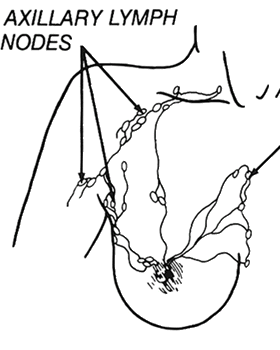
Lymph nodes is an important factor when staging breast cancer. Lymph nodes when containing the breast cancer cells factor the treatment determination, and predicting survival. Breast cancer cells are most commonly spreads first to the axillary (underarm) lymph nodes before spreading to other regions of the body.

Breast Cancer Lymph Nodes

Basically, there are three types of lymph node involvement in breast cancer:

1. Minimal (or microscopic) lymph node involvement:
The lymph nodes are found with only a small number of cancer cells.

2. Significant (or macroscopic) lymph node involvement:
The cancer has spread to a particular lymph node or group of nodes and most of the time it can be felt by hand or seen without a microscope.

3. Extra-capsular lymph node extension:
The whole lymph node is taken over by a breast cancer tumor and spills beyond the wall of the lymph node into the surrounding fat.

Generally, the more extensive the lymph node involvement, the more aggressive the breast cancer will be. But the extent of disease within a particular lymph node is less important than the total number of lymph nodes affected. The more lymph nodes that are involved, the more threatening the breast cancer may be.

The following categories are used to describe the overall level of breast cancer lymph nodes involvement:

* no lymph nodes involved
* 1–3 nodes involved
* 4–9 nodes involved
* 10 or more nodes involved

Negative and Positive Breast Cancer Lymph Nodes:
If lymph nodes are clear of cancer, they are considered negative or clear, and rated N0. Lymph nodes are considered positive or cancerous and rated N1, N2, or N3 depending on the number affected and the location when it contain cancer cells or micro-metastasis. Rating positive breast cancer lymph nodes:

* N1: Cancer is found in 1-3 lymph nodes under the arm or lymph nodes within the breast
* N2: Cancer is found in 4-9 lymph nodes under the arm or lymph nodes within the breast
* N3: Cancer is found in 10 or more lymph nodes under the arm, or has spread under or over the collarbone. It may have been found in the underarm nodes as well as lymph nodes within the breast.

Determining whether the lymph nodes are free of cancer or not is an essential part of the breast cancer staging process and will help determine treatment and prognosis. Tumor size and the extent to which breast cancer has metastasized (spread) to other regions of the body is also examined.

StageTumor SizeLymph Node InvolvementMetastasis (Spread)
ILess than 2 cmNoNo
IIBetween 2-5 cmNo or in same side of breastNo
III More than 5 cm Yes, on same side of breastNo
IV Not applicableNot applicable Yes

An axillary node dissection is a standard way to examine the lymph nodes. This procedure is normally done during the lumpectomy or mastectomy operation. It involves removing 10 to 30 lymph nodes for pathological examination using a microscope. The most common side effect of an axillary node dissection is lymph-edema (chronic swelling) of the arm, which may affect up to 10% of patients. Lymph-edema is caused when fluid to build up in the arm due to disruption or blocking of the normal process of draining lymph from the arm.

Sentinel node biopsy is another surgical option being used on selected breast cancer patients to determine whether breast cancer is present in the lymph nodes. A sentinel node biopsy involves removing only one to three sentinel lymph nodes (the first nodes in the lymphatic chain).

Male Breast Cancer

Male breast cancer is uncommon, accounting for only about 1% of all breast cancers. Male breast cancer is cancer that forms in the breast tissue of men. Though breast cancer is most commonly thought of as a woman's disease. It happens most common in older men, men between the ages of 60 and 70. though male breast cancer can occur at any age.

The cause of male breast cancer has not been fully characterized, but both environmental influences and genetic (inherited) factors are likely to play a role in its development. The following risk factors for the development of male breast cancer have been identified. Risk factors for male breast cancer include exposure to radiation, a family history of breast cancer and having high estrogen levels, which can occur with diseases like cirrhosis or Klinefelter's syndrome.

The most common type of male breast cancer is infiltrating ductal carcinoma, which is also a common type of breast cancer in women. Other uncommon types of cancers of the breast that have been reported in men include ductal carcinoma in situ (cancer in the ducts that has not spread beyond the ducts themselves).

Symptoms of male breast cancer include lumps, changes to the nipple or breast skin, or discharge of fluid from the nipple. The most common symptom of breast cancer in men is finding a firm, non-painful mass located just below the nipple. The average size of breast cancer in men when first discovered is about 2.5 cm in diameter. The cancer may cause skin changes in the area of the nipple. These changes can include ulceration of the skin, puckering or dimpling, redness or scaling of the nipple, or retraction (turning inward) of the nipple. Bloody or opaque discharge from the nipple may also occur.

Men diagnosed with male breast cancer at an early stage have a good chance for a cure. Still, many men delay seeing their doctors if they notice unusual signs or symptoms, such as a breast lump. This is due to lack of awareness. Some men ignore breast lumps or think they are caused by an infection or some other reason, and they do not get medical treatment until the mass has had a chance to grow. Some men are embarrassed about finding a breast lump and worry that someone might question their masculinity. This may also delay diagnosis and reduce a man's chances for successful treatment. For this reason, many breast cancer in man are diagnosed when the disease is more advanced.

Treatment for male breast cancer is usually a mastectomy, which is surgery to remove the breast. Other treatments include radiation, chemotherapy and/or hormone therapy.

Breast Cancer Pink Ribbon

Breast Cancer Pink RibbonThe Breast cancer pink ribbon aimed to create a global community to support breast cancer patients, survivors and their families all over the world. Ribbons have been used to express solidarity on the part of the wearer with the identified cause since the early to late 20th Century.

The Susan G. Komen Foundation handed out pink ribbons to participants in its New York City race for breast cancer survivors, in the fall of 1991. The first breast cancer awareness stamp in the U.S., featuring a pink ribbon, was issued 1996. Breast Cancer Awareness Month each October, hundreds, if not thousands, of products are emblazoned with pink ribbons, colored pink, or otherwise sold with a promise of a small portion of the total cost being donated to support breast cancer awareness or research.

Nevertheless, promotion of the pink ribbon as a symbol for breast cancer has not been credited with saving any lives. Wearing or displaying a pink ribbon has been denounced as a kind of slacktivism, because it has no practical positive effect. Particularly sales promotions for products that increase pollution, have been condemned as pink washing (a portmanteau of pink ribbon and whitewash).

3 Day Breast Cancer Walk 2010 Schedule

The Susan G. Komen 3 day breast cancer walk are held in cities throughtout the USA. Walkers walk approximately 20 miles a day, and camping out each night. The 3 day breast cancer walk benefiting the Susan G. Komen Foundation are challenging and energizing events held in multiple US cities every year. Walkers are challenged to walk approximately 20 miles a day for 3 days. They camp out each night in a tent city. All meals, snacks, and trail support are provided. Each walker must raise a minimum of $2300 in donations to participate.

The 2010 schedule are as followed:
Boston: 23-25 July
Cleveland: 30 July - 1 August
Chicago: 6-8 August
Michigan: 13-15 August
Twin Cities: 20-22 August
Denver: 27-29 August
Seattle: 24-26 September
San Francisco Bay Area: 1-3 October
Washington, DC: 8-10 October
Philadelphia: 15-17 October
Atlanta: 22-24 October
Tampa Bay: 29-31 October
Dallas/Fort Worth: 5-7 November
Arizona: 12-14 November
San Diego: 19-21 November

Registration can be done online or by mail with a fee of $90. Once registered participant will receive the training packet and be assigned to a coach. Orientation sessions are held in the walk cities itself, and walk training groups are held in various locations. These event is open to both men and women with age 16 and above. Minors must participate with their parent or legal guardian.

Breast Cancer Statistics

Breast cancer is the second leading cause of cancer deaths in women today (after lung cancer) and is the most common cancer among women, aside from non-melanoma cancers. Its is also the most common cancer among Canadian women.

Breast cancer incidence in women in the United States is 1 in 8 (about 13%). Approximately 1.3 million women will be diagnosed with breast cancer annually worldwide and about 465,000 will die from the disease. According to the American Cancer Society, breast cancer rates have risen about 30% in the past 25 years in western countries. This is due to increased in screening which detects the cancer in earlier stages.

In 2009, an estimation of 192,370 new cases of invasive breast cancer were expected to be diagnosed in women in the U.S., along with 62,280 new cases of non-invasive (in situ) breast cancer. Less than 1% of all new breast cancer cases is expected to occur in men.

* An estimated 22,700 women diagnosed with breast cancer, 5,400 will die.
* An estimated 180 men diagnosed with breast cancer, 50 will die of it.
* On average, 437 Canadian women will be diagnosed with breast cancer every week.
* On average, 104 Canadian women will die of breast cancer every week.

Estimated Probability: One in 9 women is expected to develop breast cancer during her lifetime and one in 28 will die of it. The lifetime probability of developing breast cancer in developed countries is about 4.8%, according to the American Cancer Society (the probability is about 13% for any type of cancer). In developing countries, the lifetime probability of developing breast cancer is about 1.8%.

Breast cancer survivors rate is about 2.5 million women in the U.S. in year 2008.

Alternative Breast Cancer Treatment | Aspirin May Improve Chances of Surviving

Women suffering from breast cancer who take aspirin regularly appear to improve their chances of surviving the disease and preventing it from recurring, research suggests.

Patients taking the anti-inflammatory drug, usually for heart disease, had a 50 per cent lower chance of dying from breast cancer and a 50 per cent lower risk that the cancer would spread, according to a study of more than 4,000 women. Michelle Holmes of Harvard Medical School, who led the study published this week in the Journal of Clinical Oncology, said that the finding would need to be confirmed in other clinical trials, but suggested that aspirin might be a low-cost intervention to help improve survival rates. The risk was found to be lowest in women taking an aspirin between two and five times a week.

Continue Aspirin may improve chances of surviving breast cancer