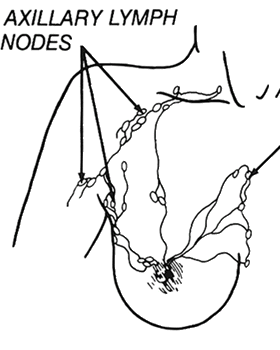
 |
| Breast Cancer Lymph Nodes |
Breast Cancer Lymph Nodes
Basically, there are three types of lymph node involvement in breast cancer:1. Minimal (or microscopic) lymph node involvement:
The lymph nodes are found with only a small number of cancer cells.
2. Significant (or macroscopic) lymph node involvement:
The cancer has spread to a particular lymph node or group of nodes and most of the time it can be felt by hand or seen without a microscope.
3. Extra-capsular lymph node extension:
The whole lymph node is taken over by a breast cancer tumor and spills beyond the wall of the lymph node into the surrounding fat.
Generally, the more extensive the lymph node involvement, the more aggressive the breast cancer will be. But the extent of disease within a particular lymph node is less important than the total number of lymph nodes affected. The more lymph nodes that are involved, the more threatening the breast cancer may be.
The following categories are used to describe the overall level of breast cancer lymph nodes involvement:
* no lymph nodes involved
* 1–3 nodes involved
* 4–9 nodes involved
* 10 or more nodes involved
Negative and Positive Breast Cancer Lymph Nodes:
If lymph nodes are clear of cancer, they are considered negative or clear, and rated N0. Lymph nodes are considered positive or cancerous and rated N1, N2, or N3 depending on the number affected and the location when it contain cancer cells or micro-metastasis. Rating positive breast cancer lymph nodes:
* N1: Cancer is found in 1-3 lymph nodes under the arm or lymph nodes within the breast
* N2: Cancer is found in 4-9 lymph nodes under the arm or lymph nodes within the breast
* N3: Cancer is found in 10 or more lymph nodes under the arm, or has spread under or over the collarbone. It may have been found in the underarm nodes as well as lymph nodes within the breast.
Determining whether the lymph nodes are free of cancer or not is an essential part of the breast cancer staging process and will help determine treatment and prognosis. Tumor size and the extent to which breast cancer has metastasized (spread) to other regions of the body is also examined.
| Stage | Tumor Size | Lymph Node Involvement | Metastasis (Spread) |
|---|---|---|---|
| I | Less than 2 cm | No | No |
| II | Between 2-5 cm | No or in same side of breast | No |
| III | More than 5 cm | Yes, on same side of breast | No |
| IV | Not applicable | Not applicable | Yes |
An axillary node dissection is a standard way to examine the lymph nodes. This procedure is normally done during the lumpectomy or mastectomy operation. It involves removing 10 to 30 lymph nodes for pathological examination using a microscope. The most common side effect of an axillary node dissection is lymph-edema (chronic swelling) of the arm, which may affect up to 10% of patients. Lymph-edema is caused when fluid to build up in the arm due to disruption or blocking of the normal process of draining lymph from the arm.
Sentinel node biopsy is another surgical option being used on selected breast cancer patients to determine whether breast cancer is present in the lymph nodes. A sentinel node biopsy involves removing only one to three sentinel lymph nodes (the first nodes in the lymphatic chain).

 Learn What Breast Cancer is and How to Deal with It.